Top 10 Medical Equipment List for Global Buyers
Choosing medical equipment for international procurement is not a simple matter of comparing prices. Hospitals, clinics, laboratories, and distributors must evaluate safety, clinical purpose, durability, maintenance, and supplier credibility. This Top 10 Medical Equipment List introduces widely used categories that support diagnosis, treatment, monitoring, and patient care across different healthcare settings.
The selection includes practical items such as patient monitors, ultrasound systems, infusion pumps, oxygen concentrators, sterilization equipment, surgical instruments, and laboratory analyzers. Each category serves a different need. A bedside monitor may track oxygen saturation every few seconds, while an autoclave must maintain reliable temperature and pressure cycles. Buyers should review certifications, warranty terms, spare-part availability, training, and local service capacity before placing an order.
No list can fit every country or facility perfectly. That matters. A rural clinic may value low power consumption more than advanced imaging features. A large hospital may require integration with electronic health records and continuous technical support. Product specifications can also change, and supplier claims deserve careful verification through documentation, testing, and professional references. This guide therefore offers a practical starting point, not a substitute for clinical assessment or regulatory review. Experienced buyers should compare total ownership costs, including installation, calibration, consumables, repairs, and staff training. Reliable equipment is not always the newest model. Sometimes, a simpler device with dependable support performs better in daily practice.
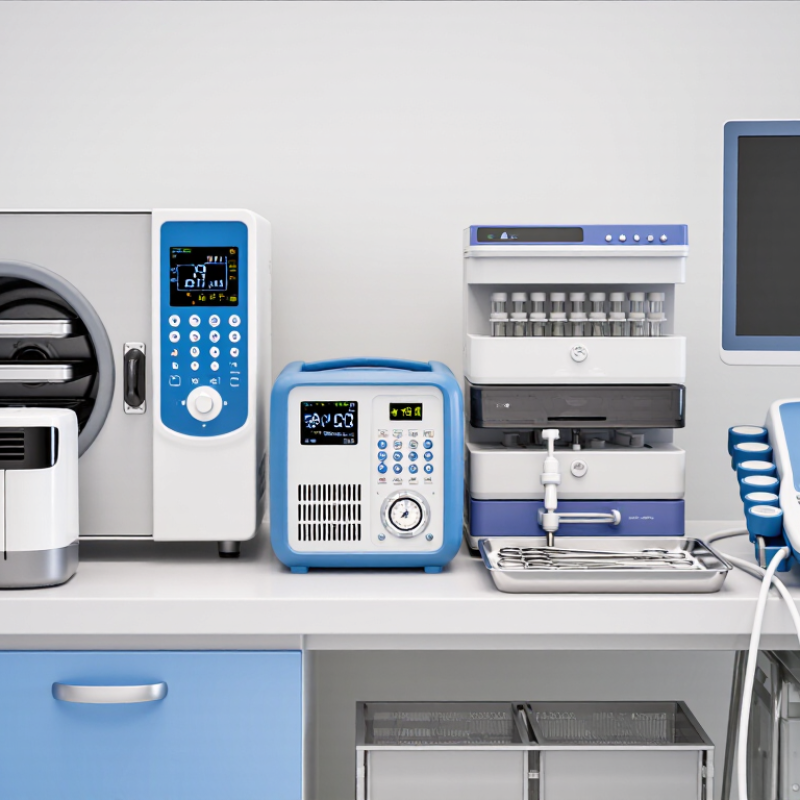
Global Market Scope: Medical Devices Surpassed US$500 Billion in 2023
Top 10 Medical Equipment List for Global Buyers
Global Market Scope: Medical Devices Surpassed US$500 Billion in 2023
The global medical device market exceeded US$500 billion in 2023. Fortune Business Insights valued it at approximately US$512.29 billion that year. Its forecast also indicates continued growth through 2030, driven by aging populations, chronic diseases, and hospital modernization. Market estimates differ by category and methodology. That matters.
A practical equipment shortlist includes patient monitors, ventilators, ultrasound systems, magnetic resonance imaging systems, computed tomography scanners, X-ray systems, infusion pumps, surgical instruments, dialysis machines, and sterilization equipment. These products support emergency care, diagnosis, treatment, and infection prevention.
WHO data shows that noncommunicable diseases cause about 74% of global deaths, increasing demand for reliable diagnostic and monitoring tools. In real procurement work, uptime often matters more than appearance.
Buyers should compare total ownership costs, not only purchase prices. Check calibration needs, consumables, service response, staff training, cybersecurity, and local regulatory approval. The Global Medical Device Nomenclature system can help standardize product classification during international tenders. A 2024 MedTech Europe report also highlights the sector’s large economic contribution and strong research intensity. Yet market reports are not identical. Some include software and services; others do not. No list is perfect. A technically advanced scanner may remain underused if trained operators, stable electricity, or maintenance support are missing. Regional needs should shape every final selection.
The Top 10 Equipment Categories Across Diagnosis, Monitoring, and Treatment
Top 10 Medical Equipment List for Global Buyers
Medical equipment purchasing works best when categories match clinical needs, not catalog popularity. The ten essential categories include diagnostic imaging systems, ultrasound devices, laboratory analyzers, endoscopy equipment, and electrocardiography machines. These tools reveal anatomy, tissue changes, blood values, and heart activity. They also support faster clinical decisions.
Monitoring categories include vital-sign monitors, multiparameter patient monitors, and fetal or maternal monitoring systems. Treatment categories include infusion pumps and anesthesia equipment. Surgical lighting and rehabilitation devices may also deserve consideration, depending on facility size. This list is not perfect for every hospital. A rural clinic may need reliable basic monitors more than advanced imaging equipment. Procurement teams should compare accuracy, alarm performance, battery life, cleaning procedures, and maintenance access. A clear technical file matters.
Tips: Request validation records, calibration details, user training, warranty terms, and spare-part availability. Check voltage, language settings, connectivity, and local regulatory requirements before ordering. Test sample workflows with nurses and technicians. Their feedback often exposes practical problems that specifications hide. Do not judge equipment by price alone. A cheaper device can create higher downtime costs. Review installation space carefully, including door width, ventilation, and backup power. Some buyers overlook these details. That mistake is expensive. Also, plan for data security and controlled access when equipment stores patient information. Reliable suppliers should provide traceable documentation, responsive technical support, and realistic delivery schedules. A polished brochure is not proof of dependable performance.
Clinical Selection: Primary Care Addresses About 80% of Health Needs
Top 10 Medical Equipment List for Global Buyers
Clinical Selection: Primary Care Addresses About 80% of Health Needs
Primary care clinics manage most everyday health concerns, often estimated at about 80% of needs. Equipment should support safe assessment, early detection, and routine monitoring. A practical list includes an examination table, stethoscope, blood pressure monitor, digital thermometer, pulse oximeter, weighing scale, glucometer, otoscope, electrocardiograph, and nebulizer. These tools help clinicians assess breathing, circulation, infection, diabetes risk, ear conditions, and heart symptoms. However, the exact mix depends on local disease patterns, staffing, power supply, and referral access.
Clinical experience shows that accuracy matters more than a crowded equipment room. Choose devices with clear instructions, durable construction, replaceable parts, and documented calibration procedures. Staff should know how to use, clean, and store every device. A pulse oximeter may be useful during respiratory assessment, but poor circulation or incorrect placement can distort readings. That detail is easy to miss. Even a reliable device can produce weak decisions when training is limited.
Tips: Check calibration records before purchase. Confirm local service support and spare-part availability. Test equipment under real clinic conditions, including unstable electricity and heavy daily use. Keep infection-control supplies near examination areas. Review performance after three months, not only on delivery. Some purchasing plans look efficient on paper, yet ignore maintenance time and staff workload. That deserves reflection.
Regulatory Classification: FDA’s Three Device Classes and ISO 13485
Global buyers should treat regulatory classification as a purchasing filter, not a paperwork detail. The FDA places medical devices into Class I, II, or III, based on risk and required controls. Class I generally covers lower-risk products, while Class III includes life-supporting or implantable devices. FDA data indicates that roughly 47% of devices are Class I, 43% Class II, and 10% Class III. Intended use changes everything. A monitoring device may receive different controls when used for diagnosis, treatment, or home care.
ISO 13485 focuses on the manufacturer’s quality management system. It does not approve a product by itself. The ISO Survey of Certifications 2023 reported more than 31,000 ISO 13485 certificates worldwide, showing its importance in international sourcing. Buyers should request a valid certificate, scope statement, audit status, risk files, complaint records, and traceability evidence. Check production samples against drawings, labels, and sterilization records. Small gaps matter.
The FDA’s Quality Management System Regulation, effective in 2026, aligns U.S. requirements more closely with ISO 13485:2016. This raises the value of supplier audits and controlled change procedures. Still, certification is not proof of perfect performance. I have seen purchasing teams trust certificates without checking scope or expiry dates. That assumption needs correction. A practical shortlist should connect each device’s FDA class, intended use, ISO 13485 scope, and post-market controls before shipment.
Global Buyer Checklist: Cost, Uptime, Training, Warranty, and Service Data
Top 10 Medical Equipment List for Global Buyers
A global buyer should evaluate more than the purchase price. The WHO Medical Equipment Maintenance Programme reports that 50–80% of equipment in some low- and middle-income settings becomes unusable because of maintenance, training, or infrastructure gaps. That figure deserves caution, but the risk is real. Ask for total cost of ownership, including installation, calibration, consumables, software, shipping, and disposal. Require documented uptime targets. A practical checklist should include mean time to repair, spare-parts lead time, preventive-maintenance completion, and service coverage in your region. Cheap equipment can become expensive when one missing sensor stops a department.
Training is often treated as a handover meeting. That is not enough. Request competency-based training for operators, biomedical engineers, and supervisors. The WHO Global Atlas of Medical Devices stresses the importance of trained personnel and maintenance systems. Verify training records, refresher schedules, local-language manuals, and remote technical support. Warranty terms need careful reading. Check response times, excluded parts, software updates, travel fees, and coverage after installation. Service data should be supplied monthly, not only during sales discussions.
Tips: Build a five-year cost model. Ask for anonymized service logs from comparable sites. Test the equipment under local power, temperature, and workload conditions. Do not accept “high uptime” without a definition. I would also document every assumption. Some will be wrong. That is useful, because weak assumptions often reveal hidden procurement risk. Cross-check supplier claims against independent reports, inspection records, and references from hospitals using similar infrastructure.
Related Posts
-
How to Choose the Best Health Equipment Store?
-
How to Source Direct Medical Equipment in 2026?
-
2026 Best Medical Supplies Equipment for Global Buyers?
-
Top 10 Medical Equipment Supplies in China for Global Buyers?
-

What is Care Equipment and How to Choose the Right One?
-

Top Free Medical Equipment for Seniors Worldwide?