| Patient Monitors |
Continuous measurement of vital signs such as ECG, SpO₂, non-invasive blood pressure, temperature, and respiration. |
Electrical protection, alarm safety, defibrillator protection, measurement accuracy, electromagnetic compatibility, and secure patient connections. |
IEC 60601-1; IEC 60601-1-2; IEC 60601-2-27; IEC 60601-2-49; ISO 80601-2-61 where pulse oximetry is included. |
Applicable-market medical-device registration; quality-management evidence under ISO 13485; risk-management file under ISO 14971; conformity assessment appropriate to device classification. |
Calibration reports, alarm-limit verification, ECG and SpO₂ accuracy testing, battery endurance results, EMC test report, and software verification records. |
Compare readings with calibrated reference instruments; test audible and visual alarms; inspect cables, probes, battery condition, display visibility, and data export. |
High |
| Ventilators |
Delivery of controlled mechanical ventilation for patients requiring respiratory support. |
Control of tidal volume, pressure, oxygen concentration, disconnection, occlusion, power failure, and excessive airway pressure. |
IEC 60601-1; IEC 60601-1-2; ISO 80601-2-12 for critical-care ventilators; ISO 80601-2-80 for home-care ventilatory support equipment where applicable. |
Market authorization or registration in the destination country; ISO 13485 quality system; ISO 14971 risk management; usability engineering evidence under IEC 62366-1 where applicable. |
Gas-flow and pressure calibration, delivered-volume accuracy, oxygen-concentration accuracy, alarm-response testing, battery backup results, and preventive-maintenance schedule. |
Run a simulated-lung test; verify ventilation modes, alarms, oxygen blending, filters, tubing connections, power transfer, and cleaning instructions. |
Critical |
| Infusion Pumps |
Controlled delivery of fluids, medicines, nutrition, or blood products at a programmed rate. |
Protection against free flow, occlusion, air-in-line, incorrect settings, battery depletion, and unauthorized programming. |
IEC 60601-1; IEC 60601-1-2; IEC 60601-2-24; IEC 62304 for medical software where applicable; IEC 62366-1 for usability engineering. |
Destination-market device authorization; ISO 13485 quality system; ISO 14971 risk-management documentation; software lifecycle evidence where software affects safety. |
Flow-rate accuracy, occlusion-pressure test, bolus-volume test, alarm verification, battery capacity, drug-library validation where included, and cybersecurity documentation for networked models. |
Test multiple flow rates with calibrated equipment; verify anti-free-flow performance, alarm audibility, lockout functions, keypad response, and cleaning compatibility. |
Critical |
| Defibrillators |
Delivery of therapeutic electrical shocks and, in many configurations, ECG analysis and synchronized cardioversion. |
Energy accuracy, charging reliability, electrical isolation, ECG interpretation, synchronization, battery readiness, and prevention of accidental shock. |
IEC 60601-1; IEC 60601-1-2; IEC 60601-2-4; applicable requirements for ECG functions and accessories. |
Destination-market authorization; ISO 13485 quality-management evidence; ISO 14971 risk file; documented conformity assessment and post-market surveillance process. |
Delivered-energy measurement, charge-time results, synchronization test, self-test logs, battery-load test, pad shelf-life records, and service calibration history. |
Use an electrical safety analyzer and defibrillator analyzer; inspect pads and cables; verify self-test, readiness indicator, charging time, alarms, and discharge controls. |
Critical |
| Ultrasound Systems |
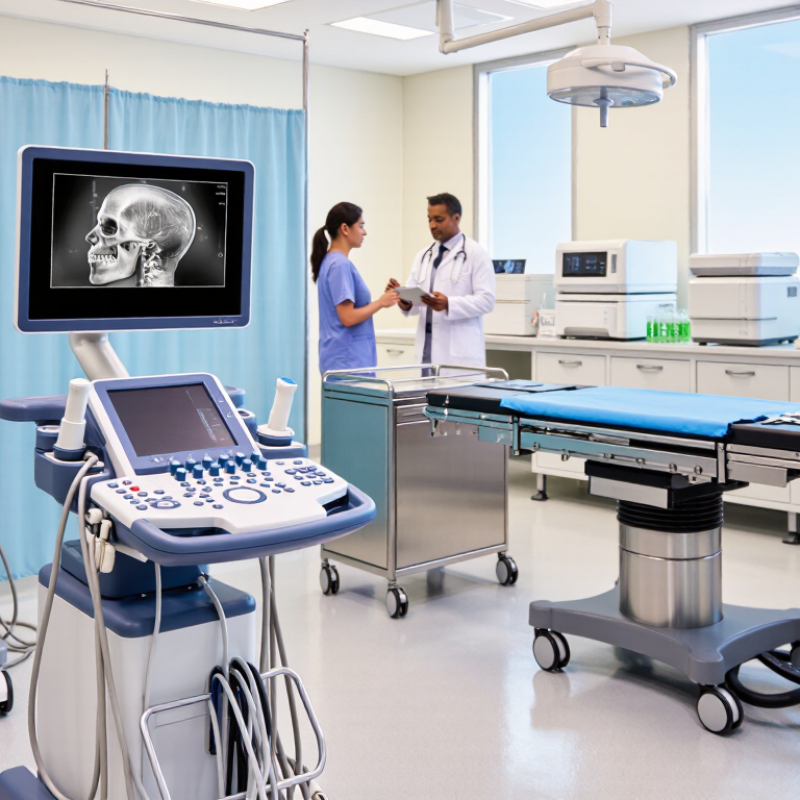
Non-ionizing imaging for diagnostic assessment, measurement, and procedure guidance. |
Electrical safety, acoustic output control, thermal and mechanical index display where applicable, probe integrity, and correct image interpretation. |
IEC 60601-1; IEC 60601-1-2; IEC 60601-2-37; IEC 62366-1; IEC 62304 where software is safety-relevant. |
Destination-market device registration; ISO 13485; ISO 14971; electrical and electromagnetic safety reports; software and usability documentation where applicable. |
Phantom image-quality test, measurement accuracy, probe leakage inspection, electrical safety test, display uniformity, software version control, and data-export validation. |
Scan a standardized phantom; check depth and distance measurements, probe connectors, image artifacts, presets, DICOM compatibility where required, and disinfection instructions. |
High |
| Diagnostic X-Ray Equipment |
Generation and detection of ionizing radiation for diagnostic imaging. |
Radiation dose control, shielding, exposure interlocks, image-quality optimization, electrical safety, and operator protection. |
IEC 60601-1; IEC 60601-1-2; IEC 60601-2-28 or other modality-specific standards; IEC 60601-2-54 for radiography and radioscopy equipment where applicable. |
Destination-country radiation and medical-device authorization; installation and acceptance testing by qualified personnel; ISO 13485 and ISO 14971 evidence where applicable. |
kVp and mAs accuracy, exposure reproducibility, dose-area-product verification, leakage-radiation survey, image-quality phantom test, and preventive-maintenance records. |
Require site-planning documents, shielding assessment, radiation-safety training, acceptance testing, image-quality baseline, and local authority approval before clinical use. |
Critical |
| Steam Sterilizers |
Sterilization of heat- and moisture-resistant medical devices using saturated steam under pressure. |
Chamber pressure control, temperature uniformity, cycle validation, door interlock, pressure release, water quality, and drying performance. |
EN 285 for large steam sterilizers; ISO 17665 for development, validation, and routine control of moist-heat sterilization processes; IEC 61010-1 for laboratory and measurement equipment safety where applicable. |
Installation qualification, operational qualification, and performance qualification; routine monitoring records; local healthcare-facility sterilization requirements. |
Temperature and pressure mapping, leak-rate test, biological and chemical indicator results, cycle reproducibility, drying test, and calibration certificates. |
Review cycle printouts or electronic records; perform empty-chamber and loaded-chamber tests; verify door locking, water quality, alarms, and maintenance access. |
Critical |
| Medical Refrigerators and Freezers |
Controlled-temperature storage for medicines, vaccines, reagents, samples, or other temperature-sensitive materials. |
Stable temperature control, alarm response, power-loss protection, door security, temperature mapping, and prevention of freezing where prohibited. |
WHO technical specifications where applicable; ISO 13485 only when the product is regulated as a medical device; IEC 61010-1 and relevant refrigeration safety standards according to product design and jurisdiction. |
Calibration traceability; temperature-mapping protocol; destination-market electrical and product-safety compliance; documented alarm and maintenance procedures. |
Temperature uniformity, recovery time after door opening, alarm accuracy, power-failure duration, data-logger calibration, and annual mapping results. |
Conduct a loaded temperature-mapping test; verify high/low alarms, remote notification, door seal, backup power, data export, and storage-capacity claims. |
High |
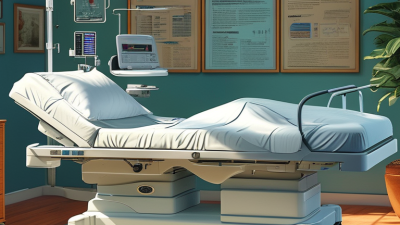
| Surgical and Examination Tables |
Positioning and supporting patients during examination, treatment, or surgery. |
Load stability, safe movement, pinch-point protection, emergency lowering, brake performance, patient restraint, and cleanability. |
IEC 60601-1 for powered medical equipment; ISO 10993-1 for patient-contacting materials where applicable; relevant product-specific requirements in the destination market. |
Load and stability test reports; electrical safety test for powered models; material and cleaning compatibility evidence; destination-market registration where regulated as a medical device. |
Static and dynamic load testing, movement repeatability, brake holding force, emergency function test, surface durability, and upholstery seam inspection. |
Verify rated load, operating range, stability, wheels and brakes, hand controls, battery operation, mattress compatibility, and infection-control procedures. |
Medium to High |
| Medical Oxygen Concentrators |
Production of concentrated oxygen for prescribed respiratory therapy. |
Oxygen concentration, flow accuracy, overheating protection, oxygen-enrichment fire risk, power failure, alarms, and patient tubing safety. |
ISO 80601-2-69; IEC 60601-1; IEC 60601-1-2; ISO 14971; IEC 62366-1 where usability affects safe operation. |
Destination-market medical-device authorization; ISO 13485 quality system; electrical and EMC test reports; risk-management and performance documentation. |
Oxygen-concentration test at specified flow rates, outlet-pressure test, alarm verification, power-consumption data, filter-life specification, and battery or backup results where fitted. |
Measure oxygen concentration after warm-up; test low-oxygen and power-failure alarms; inspect filters, tubing, noise level, ventilation openings, and cleaning guidance. |
High |
| Networked Clinical Software and Connected Devices |
Collection, processing, display, storage, or exchange of clinical data and device information. |
Cybersecurity, access control, data integrity, availability, secure updates, audit trails, backup, interoperability, and protection of personal health information. |
IEC 62304; IEC 62366-1; ISO 14971; IEC 81001-5-1 for health software cybersecurity; ISO/IEC 27001 may support information-security governance but does not replace medical-device requirements. |
Applicable medical-device authorization; software classification and technical documentation; cybersecurity risk assessment; vulnerability-management and post-market update process. |
Penetration-test summary, software bill of materials where available, vulnerability-disclosure process, update history, backup-recovery test, uptime data, and interoperability test results. |
Verify user roles, encryption, audit logs, secure configuration, offline behavior, data export, interface compatibility, patch procedures, and retention of clinical records. |
Critical for Connected Systems |



 USA
USA Human Care International
 Human Care Canada
 Human Care Sweden
  Human Care Netherlands
  Human Care Germany
  Kenmak Kenmak
  Petermann