
How to Choose Healthcare Equipment in 2026?
Choosing healthcare equipment in 2026 will require more than comparing prices and technical specifications. Hospitals, clinics, and home-care providers must examine safety, usability, maintenance, cybersecurity, and long-term value. A device may look advanced, yet fail when staff training is limited or replacement parts are unavailable.
The World Health Organization reports more than two million different medical devices, grouped into over 7,000 categories. That scale makes purchasing decisions difficult. It also explains why a reliable evaluation process matters. The WHO’s Global Atlas of Medical Devices emphasizes appropriate selection, regulation, training, and lifecycle management. These factors affect patient safety as directly as the device itself. A pulse oximeter, for example, should produce readable results in a crowded emergency room, not only in a product demonstration.
The OECD’s Health at a Glance 2023 shows continuing pressure from population ageing, workforce shortages, and rising health spending. These pressures increase demand for equipment that saves time without creating new risks. Deloitte’s 2025 Global Health Care Outlook also highlights digital transformation, data integration, and artificial intelligence as major forces shaping care delivery. However, innovation is not automatically value. Sometimes, simpler equipment performs better.
No checklist is perfect. Procurement teams should combine published evidence with hands-on trials, clinician feedback, supplier references, and total-cost analysis. They should ask practical questions: Who will operate it? How often will it need calibration? What happens during a power failure? This guide explains how to choose healthcare equipment with professional judgment, measurable criteria, and room for honest reconsideration.
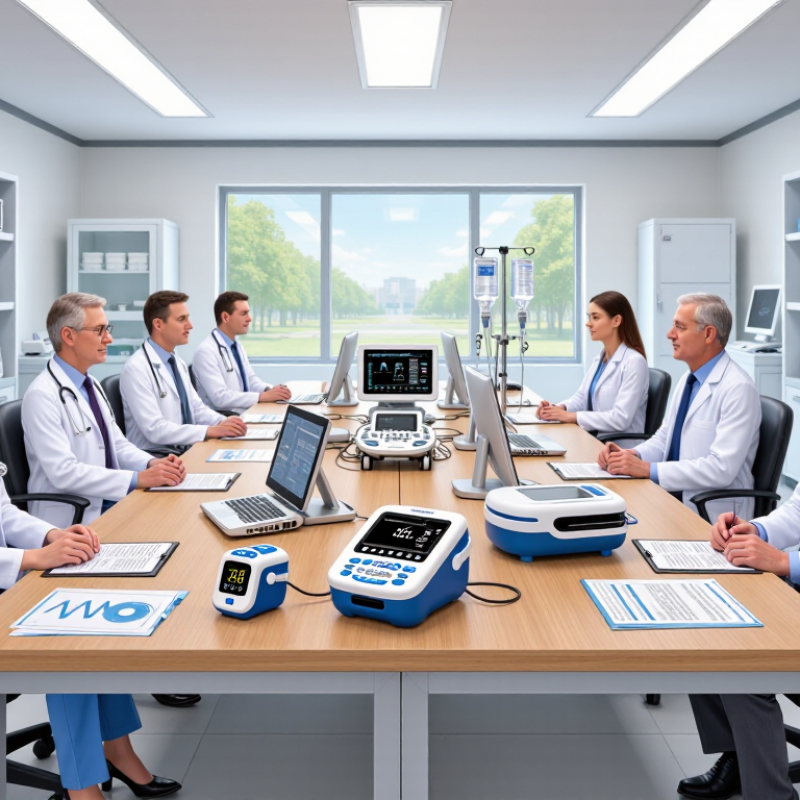
Define Healthcare Needs, Users, and Care Settings
How to Choose Healthcare Equipment in 2026?
Define the healthcare need before comparing equipment. Is it for diagnosis, monitoring, rehabilitation, mobility, or daily personal care? A clear purpose prevents expensive features from distracting the selection team. A blood pressure monitor for a clinic may need rapid cleaning and frequent use. A home device may need large controls, simple instructions, and quiet operation. The right question is practical: what problem must this equipment solve?
Identify every user, not only the purchasing manager. Nurses, physicians, caregivers, patients, and maintenance staff may interact with the same device. Their abilities and routines can differ sharply. A user with limited vision may need high-contrast displays. A caregiver may need safe lifting points and easy adjustment. Ask users to test the equipment with gloves, masks, or mobility aids. Short trials reveal problems that brochures often hide.
Care setting changes the decision. A rural clinic may face unstable power, limited technical support, and long delivery times. A busy hospital may prioritize infection-control design, workflow speed, and data integration. Home care requires privacy, storage space, and clear safety instructions. Check clinical evidence, staff training needs, cleaning procedures, warranty terms, and local regulatory requirements. A tidy checklist is helpful, but it can create false confidence. I would still revisit the choice after real users test it in real conditions. The overlooked detail may be a loose cable, a confusing alarm, or a manual nobody reads.
How to Choose Healthcare Equipment in 2026? - Define Healthcare Needs, Users, and Care Settings
| Care Setting | Primary Users | Core Healthcare Need | Suitable Equipment Categories | Important Functional Requirements | Key Selection Data | Safety and Usability Priorities | Verification Questions |
|---|---|---|---|---|---|---|---|
| Home Care | Patients, family caregivers, community nurses | Routine monitoring, medication support, mobility assistance, and recovery at home | Blood pressure monitors, pulse oximeters, thermometers, mobility aids, nebulizers, home weighing scales | Simple controls, readable displays, battery operation, compact storage, clear instructions, and easy cleaning | Measurement range, accuracy, battery life, device weight, cuff or accessory sizes, memory capacity, and connectivity requirements | Low risk of user error, audible or visual alerts, accessible design, secure data handling, and clear maintenance intervals | Can the intended user operate it without professional assistance? Are cleaning, calibration, charging, and replacement steps clearly defined? |
| Primary Care Clinic | General practitioners, nurses, medical assistants, patients | Screening, routine diagnosis, preventive care, and chronic-condition follow-up | Vital-sign monitors, examination lights, electrocardiographs, spirometers, diagnostic scales, and examination tables | Fast setup, repeatable measurements, patient data storage, interoperability, and support for multiple users per day | Measurement accuracy, throughput, consumable cost, network compatibility, data export format, service response time, and warranty terms | Infection-control compatibility, electrical safety, intuitive workflows, adjustable surfaces, and protection against incorrect patient or measurement records | Does the equipment fit the clinical workflow? Can results be transferred securely to the required health-record system? |
| Urgent Care and Emergency Department | Emergency physicians, nurses, paramedics, technicians | Rapid assessment, stabilization, continuous observation, and emergency intervention | Multiparameter monitors, defibrillators, ventilatory-support equipment, suction units, infusion pumps, and emergency carts | Rapid startup, continuous monitoring, audible and visual alarms, internal battery, portability, and reliable performance during high workload | Alarm limits, battery runtime, monitoring parameters, charging time, compatible accessories, response time, and preventive-maintenance schedule | Alarm prioritization, fail-safe behavior, clear status indicators, secure cable management, and rapid cleaning between patients | Does the device remain functional during transport or power interruption? Can staff identify and respond to critical alarms quickly? |
| Acute Hospital Ward | Nurses, physicians, respiratory therapists, biomedical engineers | Inpatient treatment, observation, medication delivery, and clinical deterioration detection | Patient monitors, infusion pumps, oxygen-delivery equipment, enteral feeding pumps, hospital beds, and transport equipment | Continuous operation, centralized data access, adjustable settings, mobility, alarm management, and compatibility with clinical protocols | Number of monitored beds, parameter capacity, alarm performance, battery backup, cleaning requirements, consumables, and total operating cost | Protection from medication or patient-identification errors, electrical isolation, infection prevention, ergonomic controls, and staff training requirements | Can the equipment be integrated into existing policies, power systems, alarm-management procedures, and maintenance programs? |
| Intensive Care Unit | Intensivists, critical-care nurses, respiratory therapists, clinical engineers | Life support, continuous physiological monitoring, precise therapy delivery, and rapid clinical response | Advanced patient monitors, ventilators, infusion pumps, dialysis equipment, blood-gas analyzers, and specialized beds | High measurement reliability, configurable alarms, multiple therapy modes, trend analysis, redundancy, and integration with central monitoring | Supported parameters, accuracy across operating ranges, alarm delay, battery performance, backup requirements, consumable availability, and service capability | Risk management, alarm fatigue reduction, cybersecurity controls, secure networking, emergency power compatibility, and documented competency training | What happens after a sensor failure, network failure, power loss, or incorrect setting? Is there a tested contingency procedure? |
| Diagnostic Imaging Department | Radiologists, radiographers, sonographers, nurses, service engineers | Anatomical imaging, disease detection, treatment planning, and follow-up assessment | Ultrasound systems, radiographic systems, computed tomography equipment, magnetic resonance equipment, and image-processing workstations | Image quality, patient positioning, workflow speed, data interoperability, dose management where applicable, and reliable archiving | Spatial and contrast resolution, examination time, patient weight limits, room requirements, power demand, service access, and data-storage capacity | Radiation protection where applicable, magnetic-field safety where applicable, patient monitoring, emergency access, cybersecurity, and staff competency | Does the room meet shielding, ventilation, power, space, and safety requirements? Can images be exchanged using recognized healthcare data standards? |
| Long-Term Care Facility | Nurses, care assistants, therapists, residents, family members | Safe daily living, chronic-condition support, falls prevention, pressure-injury prevention, and comfort | Adjustable beds, patient lifts, pressure-relief surfaces, transfer aids, medication-support equipment, and mobility devices | Safe transfers, adjustability, low noise, easy cleaning, durable construction, caregiver ergonomics, and compatibility with resident routines | Safe working load, adjustment range, lift height, battery runtime, mattress dimensions, cleaning compatibility, repair frequency, and staff-to-resident workflow | Fall prevention, entrapment risk reduction, manual-handling safety, emergency lowering, accessibility, privacy, and person-centered operation | Can caregivers use the equipment safely with different body sizes and mobility levels? Is preventive maintenance practical for daily facility operations? |
| Rehabilitation Center | Physiotherapists, occupational therapists, rehabilitation physicians, patients | Restoring movement, strength, balance, independence, and functional performance | Therapy tables, balance systems, gait-training equipment, exercise devices, assistive technology, and functional assessment tools | Adjustable resistance, measurable progress, patient-specific settings, safe support, repeatable assessments, and accessible interfaces | Load range, adjustment increments, maximum user weight, measurement repeatability, usable floor area, session capacity, and software requirements | Emergency stop access, harness and support security, fall protection, hygiene between users, and adaptation for sensory or cognitive limitations | Can the equipment support the full range of patient abilities? Does it produce objective data that clinicians can document and compare over time? |
| Mobile and Field Care | Paramedics, community-health workers, outreach clinicians | Assessment and treatment where space, power, connectivity, and environmental conditions may be limited | Portable vital-sign monitors, transport stretchers, oxygen equipment, compact diagnostic tools, emergency kits, and rugged power supplies | Low weight, shock resistance, rapid deployment, long battery life, offline operation, environmental tolerance, and secure transport | Total carried weight, operating temperature, ingress protection, battery runtime, charging options, drop resistance, data-storage capacity, and supply availability | Rugged construction, visible status indicators, secure packaging, infection-control procedures, emergency backup, and minimal training burden | Will it work without continuous network access or mains electricity? Can it be disinfected and repacked quickly between visits? |
Related Posts
-
Top 10 Must Have Healthcare Equipment for Modern Medical Facilities?
-
What is the Best Medical Office Equipment for Your Practice?
-

What is Care Equipment and How to Choose the Right One?
-

10 Essential Health Equipment Tips for a Healthier Lifestyle?
-
China Best Medical Equipment Innovations for Healthcare Improvement?
-
Top Health Equipment Tips for Global Buyers to Consider
 USA
USA Human Care International
 Human Care Canada
 Human Care Sweden
  Human Care Netherlands
  Human Care Germany
  Kenmak Kenmak
  Petermann